The Rise and Fall of the Quarterly Chatman
For nearly six decades, The Quarterly Chatman has appeared, disappeared, and risen again. From a typewritten school publication in the 1960s to what is now a modern digital blog, the publication has always refused to stay gone.
Chapter I – The Beginning
In 1968, pupils at The Settlers High School decided to create something new: a quarterly publication in which important events at the school could be reported and pupils could share their literary contributions.
A competition was held to decide what the publication would be called. The winning name was The Quarterly Chatman, a play on the purpose of the publication – to “chat” – and Chapman, the name of one of the ships that brought British Settlers to South Africa in 1820.
The Chatman began modestly. A small group of pupils formed an editorial team and produced a typewritten script that was duplicated at the school, complete with a simple sailing ship on its cover.
But what began humbly did not remain small.
Throughout 1968 and 1969, the publication grew with each successive quarter. By December 1969, The Chatman had reached 45 pages. In 1970, it became the forerunner of the first edition of The Settlers High School Magazine.
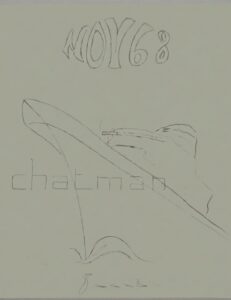
The Quarterly Chatman had officially been born. But its story was far from over.
Chapter II – The Recurring Republication
Over the years, The Quarterly Chatman went through periods of activity and periods of silence. Like many student-led projects, it faced a problem that had nothing to do with the quality of the idea itself: continuity.
A major part of the problem was that The Quarterly Chatman was traditionally run by Grade 10 pupils. Each year, the students who had spent months learning how to run the publication would move on, and a new group would have to take their place.
Students graduate. New students arrive. Teachers leave. Leadership changes. Enthusiasm at the beginning of a project can slowly burn out as the people responsible for keeping it alive move on.
And so, The Quarterly Chatman found itself caught in a strange cycle.
It would be revived with new ideas, new people, and new ambition. For a while, it would gain momentum. Then, as the students behind it were replaced the following year, that momentum would become harder to maintain until the publication eventually faded away. At some point, someone would decide to bring it back – and the cycle would begin again.
Chapter III – The 2025 Revival
One of the most recent attempts came in 2025. The 2025 Quarterly Chatman Editorial team consisted of:
- Leah Carstens
- Ayesha Parker
- Vinita Mitha
- McKay Cupido
- Keren Kambi
- Jaylee Adendorf
- Khloe October
- Stasy Kanyinda
- Sanelisiwe Skemele
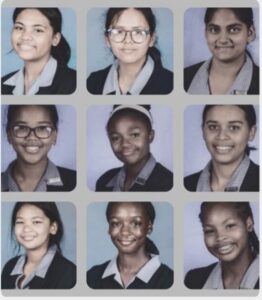
2025 Quarterly Chatman team. (Row 1) L. Carstens, A. Parker, V. Mitha, (Row 2) M. Cupido, K. Kambi, J. Adendorf, (Row 3) K. October, S. Kanyinda, S. Skemele
The project was led by Ms Cox, and at first, things appeared to be moving in the right direction.
The team produced two editions: one for Term 1 and another for Term 2.
The first edition was released on schedule. The second, however, began to experience delays. What was intended to be a Term 2 publication was eventually released at the beginning of Term 3 as things became increasingly hectic.
Still, The Quarterly Chatman was alive.

Then came August.
Ms Cox left the school, and the publication was suddenly without the person who had been managing it. It took time for someone else to take over, and eventually, a student teacher attempted to manage the project. Without the same continuity, however, the momentum began to fade.
The project that had once been consistently producing editions was no longer able to do so. Eventually, it simply evaporated.
Another revival had reached its end.
Chapter IV – The Next Resurrection
The following year, responsibility for the project was passed to Ms Botes (BO). On the surface, it might have looked like the beginning of another familiar cycle: a new team, a new person in charge, and another attempt to resurrect a publication that had repeatedly struggled to survive.
But something had already been happening behind the scenes.
Around November 2025, Keren Kambi – one of the members of the previous team – had quietly begun drafting ideas for how the publication could be made to work differently.
By April, the new team had become involved, and this time, there was genuine momentum. The project was moving, ideas were being developed, and a complete Term 1 edition was produced.
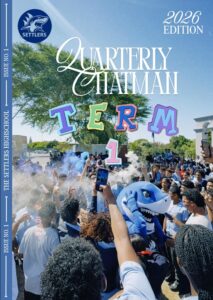
There was just one problem.
The new publication was no longer intended to be simply another physical magazine. The team had a different vision, and before producing the publication in its new form, they wanted to secure the school’s official approval for the idea.
Instead of immediately publishing what they had created, the project entered a waiting period as the team sought the stamp of approval that would allow the new vision to properly take shape.
Finally, on 28 July, approval came, and The Quarterly Chatman could move forward.
Chapter V – The Cycle Broken
With approval finally secured, the new project could begin taking shape around a structure designed to avoid the problems that had affected previous attempts.
The team is now working with fixed schedules and deadlines while maintaining a more consistent group of members. Rather than repeatedly losing experience and momentum as students move on and are replaced, this structure provides a more stable foundation from which the publication can grow.
There is also one major change: The Chatman is no longer confined to a physical quarterly magazine.
It is becoming The Deep Dive, a web-based publication officially recognised as school media.
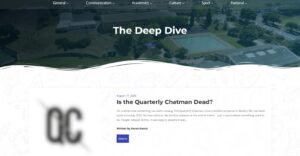
Moving online allows the articles to be published more flexibly, while giving the team access to more formal school events and resources.
Chapter VI – The Quarterly Chatman Lives On
In 1968, a small group of pupils sat down and created a typewritten publication with a simple sailing ship on its cover.
Almost sixty years later, that same idea has evolved into something very different.
The name may have changed.
The medium may have changed.
The students may have changed countless times.
But the idea remains the same: students telling the story of their school.
The Quarterly Chatman has already been born more than once.
It has grown.
It has disappeared.
It has been rebuilt.
And now, through The Deep Dive, another generation is attempting something its predecessors struggled to achieve.
The real test of this revival will not be whether The Deep Dive can produce its first few articles. It will be whether, years from now, another group of students will still be reading it.
By Edina Harris and Callum Leyer
- All Posts
- Blog